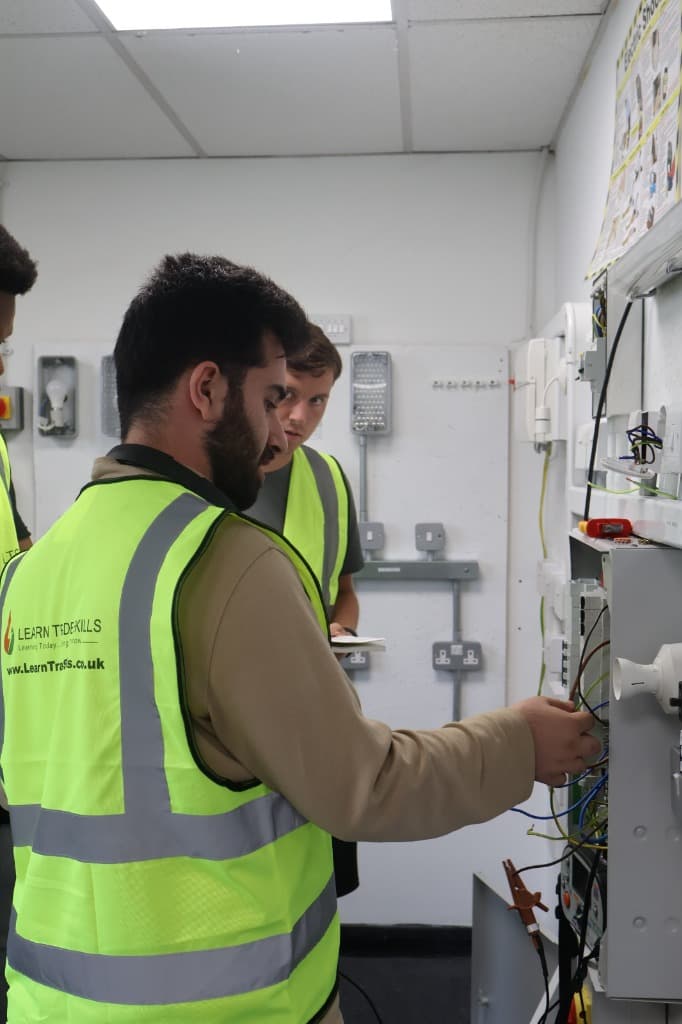
Working electricians
Current goal→2377-77
Add the recognised regulation or specialist certificate.
Best-fit route
For electricians, landlords, facilities staff and business owners who need the City & Guilds 2377 PAT Testing Course. City & Guilds 2377-77 approved.
PAT Testing is a standalone specialist qualification for in-service inspection and testing of electrical equipment. It can broaden your services, but it is not a mandatory step in the ECS Gold Card route.
FT6 wksPT14 wks
FT7 wksPT14 wks
FT3 daysPT3 days
FT2 daysPT2 days
FT~12 mo with RPL · 2 yr maxPT~12 mo with RPL · 2 yr max
FT3 daysPT3 days
Guidance included · assessment separate
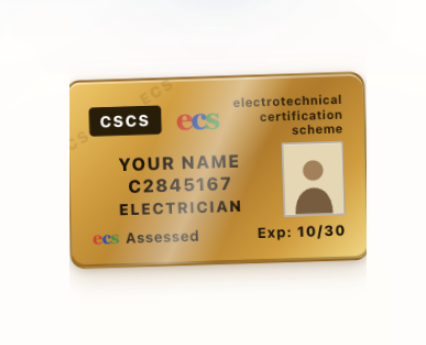
For electricians, landlords, facilities staff and business owners who need the City & Guilds 2377 PAT Testing Course. This PAT testing course in Cheshunt includes 2 days of training plus 1 practical assessment day, covering PAT tester use, visual inspection, electrical testing, labels and PAT test certificates.
Add the recognised regulation or specialist certificate.
Best-fit routeKeep records and competence current for site work.
Advisor checkedBroaden services and win higher-value jobs.
Progression readyUpdate knowledge without joining a long programme.
Flexible pathwayNo course dates are currently available. Please contact us about future dates.
Speak to an advisor and we will confirm the best cohort
Book a free consultation and we will map the shortest route from where you are today to the right qualification.
Health & Safety at Work Act 1974, Electricity at Work Regulations 1989, PUWER 1998, and employer responsibilities.
Identifying faults, damage, and incorrect wiring through systematic visual checks.
Earth continuity, insulation resistance, touch current, and protective conductor testing on a PAT testing machine.
Recording results, issuing PAT test certificates, pass/fail labelling, and maintaining compliance records.
City & Guilds 2377-77 Level 3 Award. This is included as part of the course delivery.
Book a free consultation and we will map the shortest route from where you are today to the right qualification.
Online Exam
Practical Assessment
See what is included, what changes between routes, and whether a package gives you better value before choosing PAT Testing (C&G 2377-77).
| CompareWhat changes? | Option 1PAT Testing (C&G 2377-77)Recommended | Option 21-Day Workshop | Option 3Online Theory Only |
|---|---|---|---|
| City & Guilds Certificate | Included | Not included | Not included |
| Practical Equipment Testing | Included | Limited | Not included |
| Hands-On PAT Tester Use | Included | Limited | Not included |
| Recognised City & Guilds Route | Included | Not included | Not included |
| IET Code of Practice Coverage | Included | Partial | Theory |
| Suitable for Commercial Work | Included | Not included | Not included |
| Duration | 2 days + 1 practical assessment day | 1 day | Self-paced |
Hear directly from learners who used Learn Trade Skills to progress their electrical training route.
Quick, practical, and I was testing appliances confidently by the end of the day.
Left the office, joined the trade. Seven weeks in Cheshunt, first paid job the following Monday.
LTS sequenced the Level 2 and NVQ around my work so I never lost a week of income.
Book a free consultation and we will map the shortest route from where you are today to the right qualification.
PAT testing (Portable Appliance Testing) is the routine inspection and testing of portable electrical appliances to verify they are safe to use. PAT stands for Portable Appliance Testing. It combines a formal visual inspection with electrical tests — typically earth continuity, insulation resistance, and polarity — carried out to the IET Code of Practice 5th Edition (2020).
There is no single law that names PAT testing, but the Health and Safety at Work Act 1974, the Electricity at Work Regulations 1989, and the Provision and Use of Work Equipment Regulations 1998 (PUWER) require employers to keep work equipment safe. HSE guidance INDG236 ("Maintaining portable electric equipment in low-risk environments") sets out the inspection-and-testing approach that demonstrates compliance. Landlords in England have a separate statutory duty to commission a 5-yearly EICR of fixed installations under the Electrical Safety Standards in the Private Rented Sector (England) Regulations 2020 — that is not the same as PAT testing, but most letting agents also require PAT certificates for any portable appliances supplied with the rental as standard practice.
The law requires the person doing the work to be competent; it does not name one mandatory job title. Competence depends on training, knowledge and experience for the equipment and environment involved. The City & Guilds 2377-77 qualification provides formal evidence of assessed knowledge and practical skill, but holders must still work within their demonstrated competence.
PAT testing follows three stages: (1) a user check, (2) a formal visual inspection looking for damaged cables, plugs, and casings, and (3) the electrical tests on a PAT testing machine — earth continuity, insulation resistance, and polarity. Each appliance is then labelled with a pass or fail sticker and the result is logged on a PAT test certificate or register.
A PAT testing machine (PAT tester) is a handheld instrument that runs the electrical tests on portable appliances — earth continuity, insulation resistance, leakage current, and polarity. Common brands include Megger, Seaward, Kewtech, and Fluke. Our course familiarises you with machine setup, reading results, and recording them on a PAT test certificate.
Yes. On passing this course you receive a City & Guilds 2377 PAT testing qualification — the recognised PAT tester certification in the UK. Each appliance you subsequently test produces a portable appliance test certificate (a register or labelled report) recording the date, the test results, and the tester.
Book the next short course and keep your records, competence and site opportunities current.
No obligation · usually same-day response · speak to a qualified advisor.PAT Testing (C&G 2377-77)
£389Before you start
This list comes from the LTS course catalogue. Check it again before attending in case a publication edition changes.
Useful supporting publications, but not required for attendance.
As an Amazon Associate I earn from qualifying purchases.
Code of Practice for In-service Inspection and Testing of Electrical Equipment (5th Edition)
Current IET reference for the 2377 PAT qualification.
View on Amazon (paid link)Prefer the full catalogue? View all course books and references.