

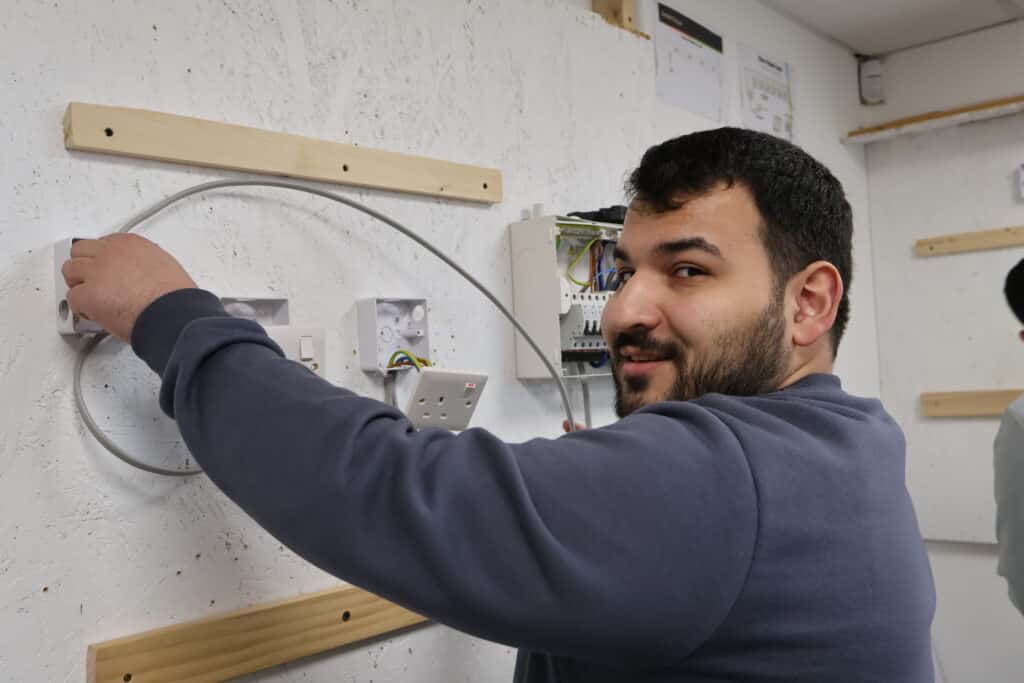
Sezai Aramaz, Director, Learn Trade Skills
I have spent over 40 years working in the electrical industry, and one of the most common problems I see is confusion around qualifications. Not because the system is complicated, but because people are rarely told what each qualification is actually there to do.
Many learners end up collecting certificates without understanding how they fit together. Others worry they are missing something essential. In this guide, I want to explain the electrician qualification pathway clearly and honestly, so you know exactly what each stage means and why it matters.
To be recognised as a fully qualified electrician in the UK, you need to complete a structured pathway. Each qualification builds on the one before it, and each serves a different purpose.
In simple terms, the pathway works like this:
Level 2 gives you the foundations
Level 3 develops technical knowledge
NVQ Level 3 proves you can do the job on site
AM2 confirms your competence independently
All four are required if you want to be considered fully qualified and apply for an ECS Gold Card.
Along the way, you will also hear about other courses such as the 18th Edition, inspection and testing, and Part P. These are important, but they support your work rather than replace the core qualifications. I will explain where they fit shortly.
Level 2 is where most people start, especially career changers.
At this stage, the focus is on understanding the basics of the trade. You will learn electrical theory, safe isolation, wiring methods, and essential health and safety. This is about building knowledge and confidence, not about working independently.
I often explain Level 2 as learning the language of electrics. Until you understand the terms, principles, and safety rules, you cannot move on properly.
On its own, Level 2 does not make you a qualified electrician. It prepares you for further training.
Level 3 takes things to a more professional level.
This is where training becomes more technical and more closely aligned with real-world work. You will cover inspection and testing principles, fault finding, wiring regulations, and system design.
By the end of Level 3, most learners can work on site under supervision. You start thinking like an electrician rather than a trainee, but this stage still focuses on knowledge rather than proven on-site competence.
Level 3 is a critical part of the pathway, but it is not the final step.
The NVQ is where theory turns into real ability.
Unlike classroom-based qualifications, the NVQ is evidence-based. You must prove that you can carry out electrical work safely and correctly on real sites. This includes real installations, correct testing and certification, safe working practices, and compliance with regulations.
In my experience, this is the stage where people truly become electricians. It builds confidence, professionalism, and practical competence.
The NVQ cannot be completed without access to site work. There are no shortcuts here.
The AM2 is the final independent assessment.
This is where your skills are tested under controlled conditions to confirm that you meet the industry standard. You are assessed on installation work, fault diagnosis, inspection and testing, and professional conduct.
Once you pass the AM2, you have demonstrated that you are competent to work independently. At this point, you are recognised as a fully qualified electrician and can apply for an ECS Gold Card.
As people move through training, they often hear about the 18th Edition Wiring Regulations. This is not a separate qualification pathway, but it is extremely important.
The 18th Edition ensures you understand current wiring regulations and legal requirements. Most employers expect it, and it underpins inspection, testing, and compliance work.
It supports safe working and professional standards, but it does not replace Level 3, the NVQ, or the AM2.
Inspection and testing is another area that often causes confusion.
The 2391-52 focuses specifically on testing, inspection, and certification. It is highly valued by employers and useful for progression, especially if you want more responsibility.
However, it builds on existing competence. It does not replace the need for the NVQ or AM2, and it is not a substitute for being fully qualified.
Part P is mainly relevant for domestic electrical work.
It helps electricians understand compliance when working in dwellings and is particularly useful if you plan to work in domestic settings or become self-employed.
Part P is helpful, but it is not required to be classed as fully qualified.
Over the years, I have seen many people arrive with certificates but without the ability to work safely or confidently on site.
Without completing the full pathway, you cannot apply for an ECS Gold Card, you cannot work independently, and employers will not trust your competence. The qualification structure exists to protect safety, quality, and the reputation of the trade.
Collecting certificates without understanding their purpose only leads to frustration.
Do I need Level 2 before Level 3?
In most cases, yes. Level 2 provides the foundation knowledge you need before moving on to Level 3, unless you already have equivalent experience.
Can I complete the NVQ without working on site?
No. The NVQ is based on real work. You must be able to provide on-site evidence of installations, testing, and safe working practices.
Is the AM2 difficult?
It can feel challenging, but it is fair. If you have been properly trained and have genuine site experience, it is very achievable.
Do I need the 18th Edition to be a qualified electrician?
You need to understand current wiring regulations, and most employers expect the 18th Edition. However, it supports compliance and safe working rather than replacing the main qualification pathway.
Is inspection and testing 2391-52 mandatory?
It is not mandatory to be classed as fully qualified, but it is highly valued by employers and useful for career progression.
Do I need Part P to work as an electrician?
Part P is mainly relevant for domestic work. It is useful, especially if you plan to work in homes or become self-employed, but it is not required to be fully qualified.
Can I become an electrician without an apprenticeship?
Yes. Many adults follow a structured training and NVQ route rather than an apprenticeship, and the end standard is the same if the pathway is completed properly.
How long does it usually take to complete everything?
For most adults, completing the full pathway takes between two and four years, depending on how quickly you gain site experience.
Am I too old to become an electrician?
No. Age is rarely an issue. Commitment, attitude, and willingness to learn matter far more than how old you are.
Why do some courses promise qualification in a few months?
Because they focus on certificates, not competence. Proper qualification takes time, experience, and independent assessment.
If you want a proper career in this trade, not just certificates, you need to understand what each qualification is there to achieve. Level 2 and Level 3 build knowledge, the NVQ proves competence, and the AM2 confirms it independently. Additional courses strengthen employability and progression, but they do not replace the core pathway.
When you follow the process properly and in the right order, you do not just become qualified. You become confident, employable, and respected in the industry.

Sezai Aramaz is the esteemed founder of Learn Trade Skills, boasting over 40 years of experience in the electrical industry in the UK. With two decades dedicated to educating future electricians, he served as an Electrical Installation Lecturer and Assessor. Aramaz's expertise and commitment have contributed significantly to the growth and proficiency of aspiring tradespeople in the field.